

Everything You Need to Know About Alcohol In Skincare Products

Skincare products with alcohol will dry out your skin, right? Not necessarily.
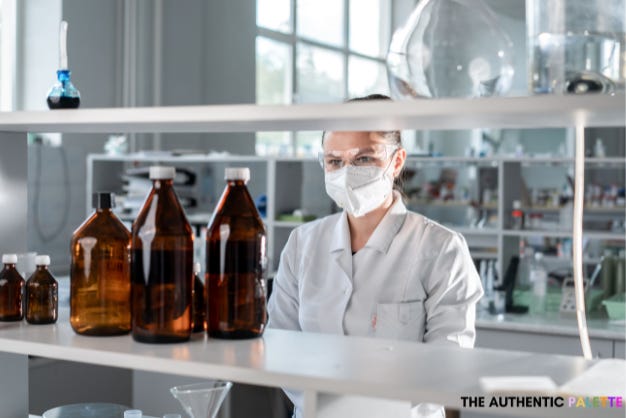
There is confusion surrounding different types of alcohol. I think that when we think of alcohol, many of us picture a bottle of drugstore rubbing alcohol. It is very drying. There are several different types of alcohol that are used in formulating skincare products. Some of these are drying, while others are emollient.
The difference lies in the molecular size of the alcohol molecule as well as the amount.
In chemistry terms, alcohol really just means that a molecule has an -OH (or hydroxyl group). This hydroxyl group is attached to a carbon. There can be any number of carbon atoms in this molecule. Short-chain alcohols have from 1–3 carbons, while long-chain alcohols are considered those with more than 8 carbons.
The Drying Alcohols
The drying alcohols most of us are familiar with are the common short-chain alcohols: isopropyl alcohol and ethyl alcohol. Alcohol names are often shortened by using the suffix –ol, so you may also see these listed on ingredient labels as isopropanol and ethanol. Isopropanol is rubbing alcohol. It is toxic if ingested. Ethanol is the type of alcohol found in alcoholic drinks.
In skincare, isopropyl and ethyl alcohol are commonly used in toners, hand sanitizers, and more. They are often used as preservatives or as solvents for other ingredients in the product. If you see Denatured Alcohol or Alcohol Denat. on a product label, know that these are just other terms for ethyl alcohol.
These short-chain alcohols have a drying effect on the skin because their small size allows them to penetrate more deeply. Using products with short-chain alcohols will likely cause skin to become dehydrated. If you suffer from rosacea, avoiding short-chain alcohols is very important, as they are common triggers for the condition.
The “Good” Alcohols
Not all alcohols are bad for the skin, though. I mentioned earlier in this post how certain alcohols serve as emollients. These are the long-chain alcohols, which are essentially fatty alcohols. They are derived from natural oils such as coconut and palm. Instead of being liquids, they are waxy solids. On ingredient labels, you will see them listed as cetyl alcohol, behenyl alcohol, stearyl alcohol, and cetearyl alcohol.
In skincare products, the purpose of fatty alcohols is to keep the water and oil emulsion together. Without them, the product would separate. They also improve the texture and appearance of the product. Fatty alcohols are skin emollients and are non-toxic. Unlike other alcohols, they actually condition and soften the skin.
While so many products say “alcohol-free,” it is important to remember that this is not necessarily a good thing when it comes to skincare. Many products are more effective with the addition of fatty alcohols, especially for dry skin. For example, many rich lotions and creams contain cetyl alcohol. Don’t let the word “alcohol” fool you—it can actually be beneficial!